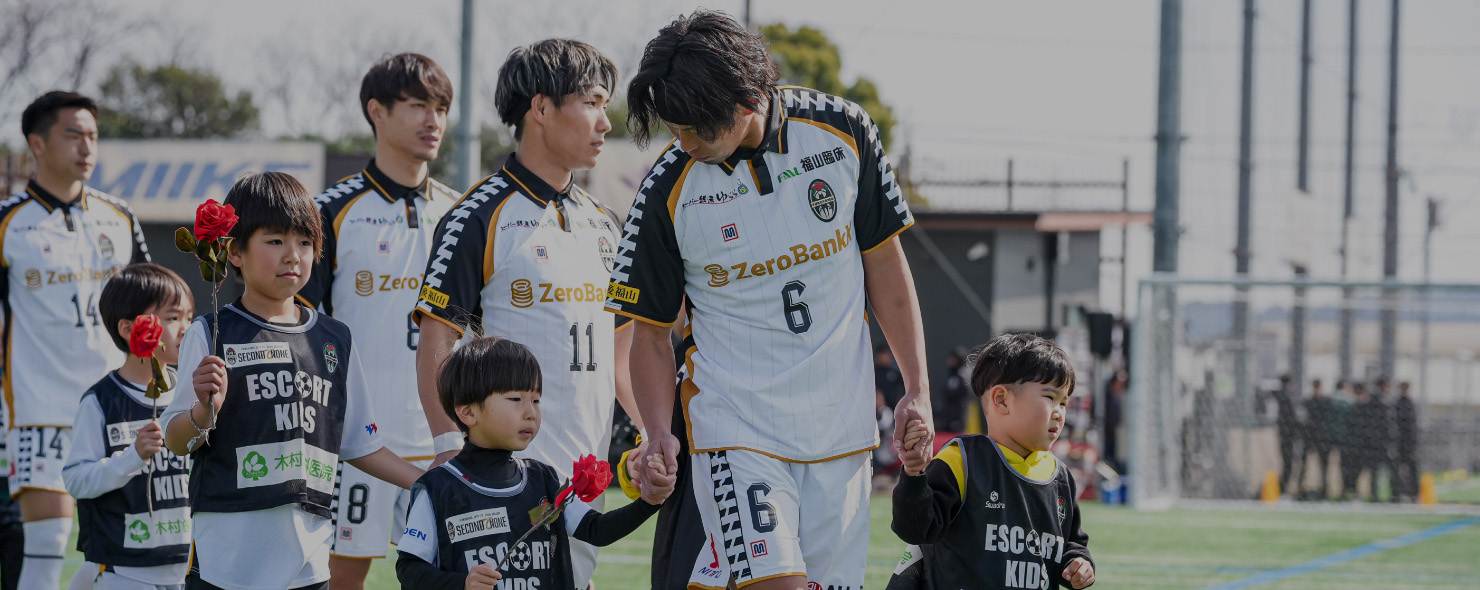

この春、福山市内すべての公立小学校に
入学する新一年生約3,400名に、
地元で織り、縫い上げた
「福山産デニムのトートバッグ」を贈ります。
MY FIRST DENIM PROJECT。
それは、子どもたちが生まれてはじめて
出会う、
ふるさとのデニムの物語です。
This spring, we will present a Fukuyama denim tote bag, woven and sewn locally,
to 3,400 first-grade students entering all public elementary schools in Fukuyama City.

It is the story of the hometown denim that children encounter
for the very first time in their lives.
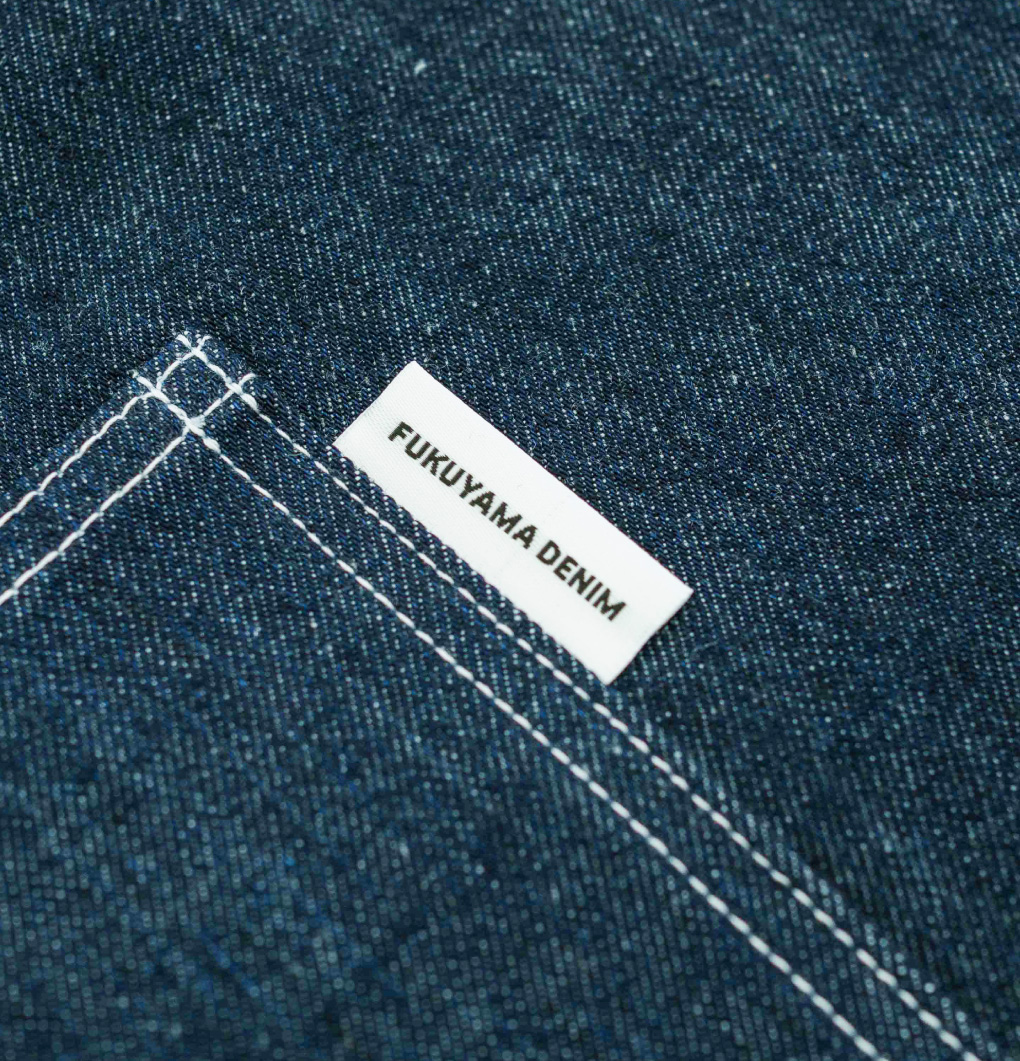
備後福山は、日本一のデニム産地
と呼ばれるまちです。
世界のブランドが指名する生地が、
毎日このまちの工場から生まれています。
しかし、学校へ訪問するたびに、
私たちはある事実に気づきました。
「福山がデニムのまちだって知っている?」
そう聞くと、首をかしげる子どもたちが、
驚くほど多いのです。
子どもだけではありません。
親御さんや先生でも、
「なんとなく聞いたことはあるけれど…」
という声が少なくありません。
こんなにすごいまちに住んでいるのに、
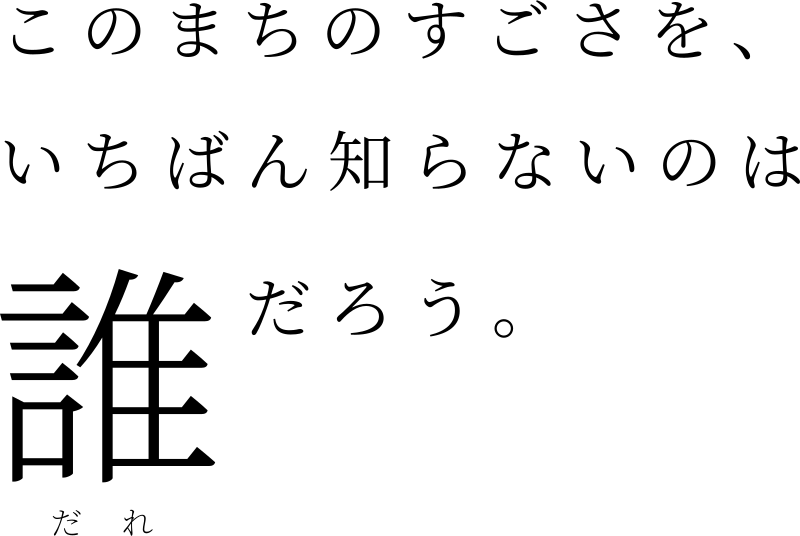
その“すごさ”をいちばん知らないのが、
私たち自身だとしたら——。
それは、もったいないを通り越して、
すこし悔しい。
福山のデニム生地は、
国内生産の8割以上を占めています。
それでも、福山が「デニムのまち」だと
認識している人は42.6%。
「日本一の産地」だと知っている人は
22%にとどまります。
Bingo Fukuyama is known as the leading denim production region in Japan.
The fabrics chosen by global brands are produced every day in factories throughout this city.
However, every time we visit schools, we notice something surprising.
When we ask, “Did you know Fukuyama is a denim city?” many children tilt their heads in confusion.
And it is not only the children.
Even parents and teachers often say, “I think I’ve heard that somewhere, but...”
Despite living in such a remarkable place, if the people who know the least
about its greatness are the very ones who live here—
that feels not only unfortunate, but a little frustrating.
Fukuyama’s denim fabrics account for more than 80% of Japan’s domestic production.
Even so, only 42.6% of people recognize Fukuyama as a “denim city,”
and just 22% know that it is the number one denim production region in Japan.

だから、
ファースト
デニム
をこのまちから。
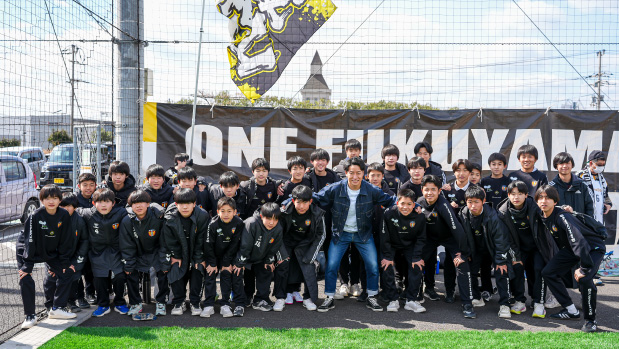
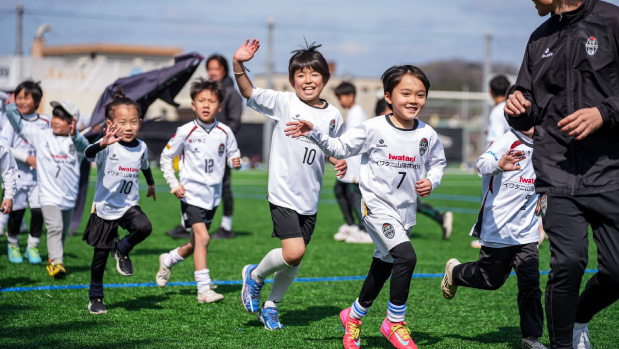
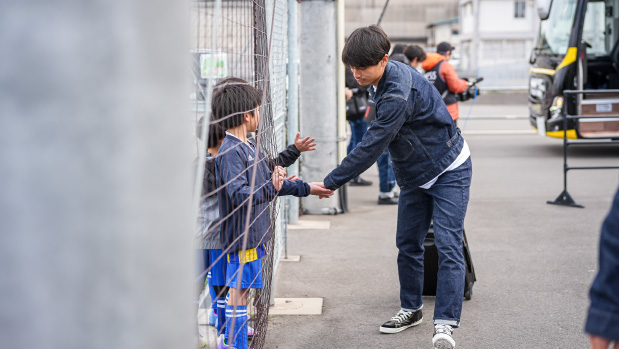
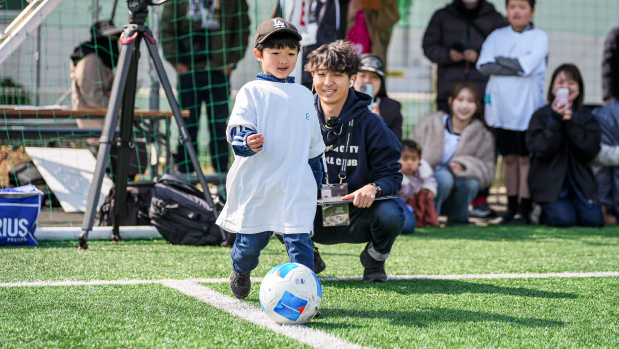
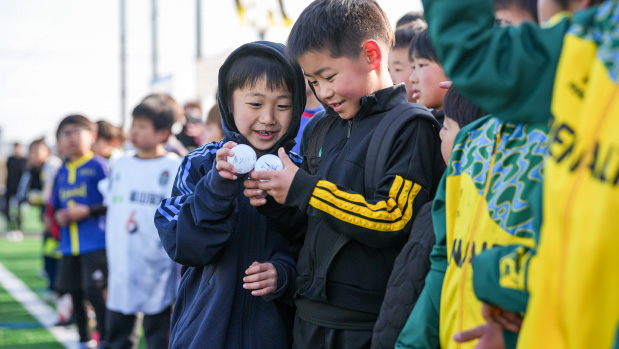
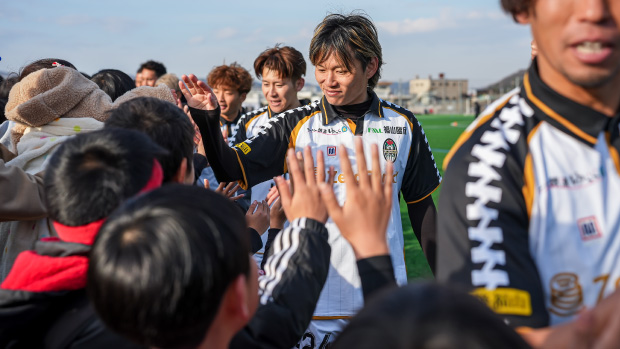
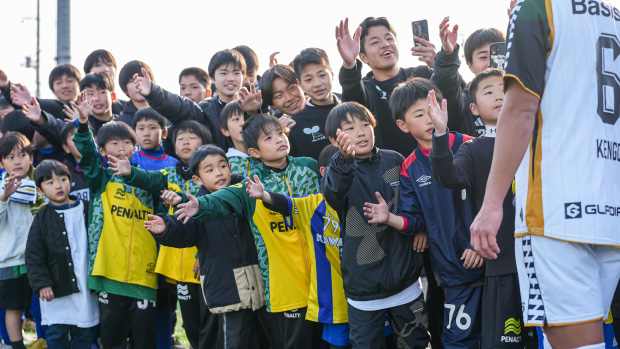
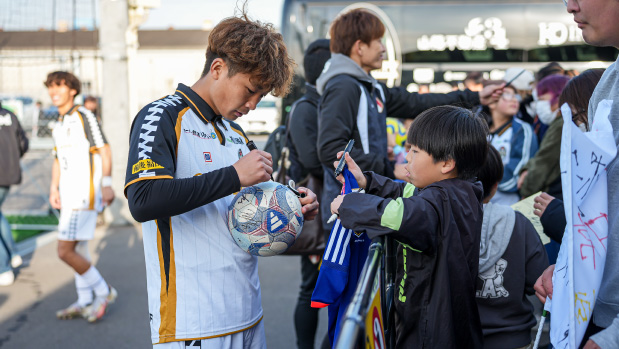
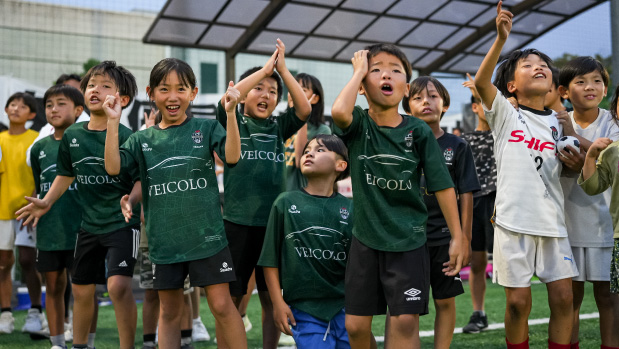
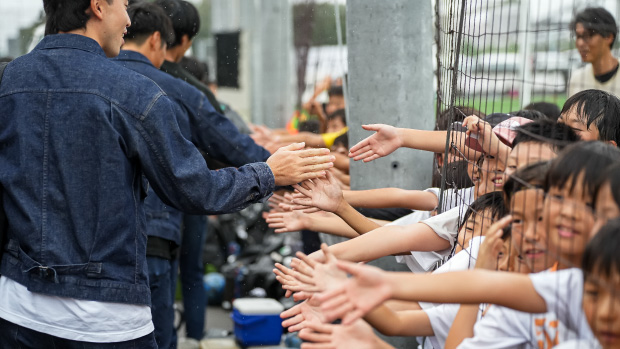
福山シティFCは、年間およそ100回、
学校や地域のイベントに足を運んでいます。
グラウンドで一緒に汗をかき、
教室で夢の話をしながら、ずっと思ってきました。
このまちの子どもたちが、
もっと自分のまちを誇れるようになってほしい。
その答えのひとつが、
「いちばん最初の地元ブランドになること」
でした。
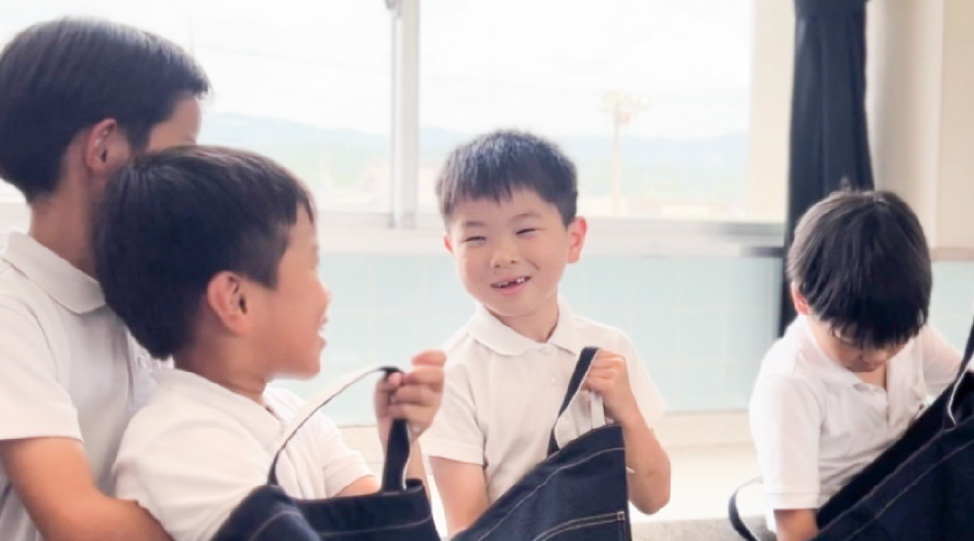
ランドセルを背負ったその日から、
毎日のように一緒に登下校するバッグ。
そこに「福山デニム」という名前が刻まれていたら、
子どもたちは自然と、このまちの産業や働く人たちに出会っていきます。
最初に出会う“ふるさとのプロダクト”が、
このまちで織られたデニムだったらいい。
だから私たちは決めました。
新一年生、全員にファーストデニムを贈ろう。
MY FIRST DENIM PROJECT は、
そんな福山シティFCの決意から生まれました。
Fukuyama City FC visits schools and community events about 100 times a year.
We sweat together on the field and talk about dreams in classrooms.
Through those moments, we have always felt one thing:
we want the children of this city to feel more proud of where they come from.
One answer we found was this—
to become the very first local brand they encounter.
From the day they carry their school bags,
a tote that goes with them to and from school almost every day.
If the name “Fukuyama Denim” is on that bag,
children will naturally begin to connect with the industries and the people who work in this city.
What if the first “hometown product” they encounter
is denim woven right here in this town?
That is why we decided:
every new first-grade student will receive their first denim.
My First Denim Project was born from that determination of Fukuyama City FC.

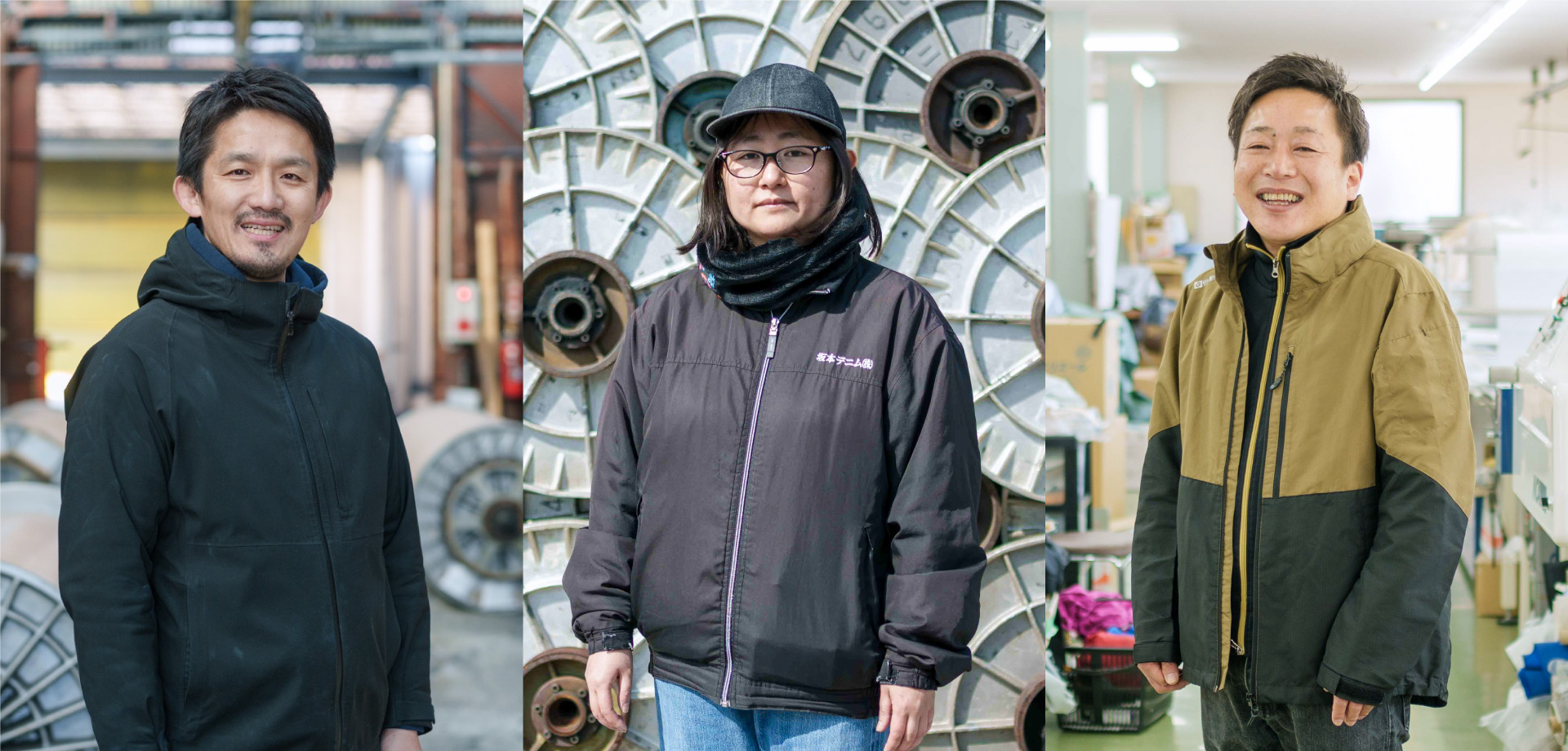
子どもたちの“一枚”を織っているのは、
このまちの大人たちだ。
CRAFTSMAN
SAKAMOTO DENIM
坂本デニム
子どもたちの“一枚”のはじまりは、
まだ白い糸の状態から。
デニムの物語は、糸を染めるところから
始まります。
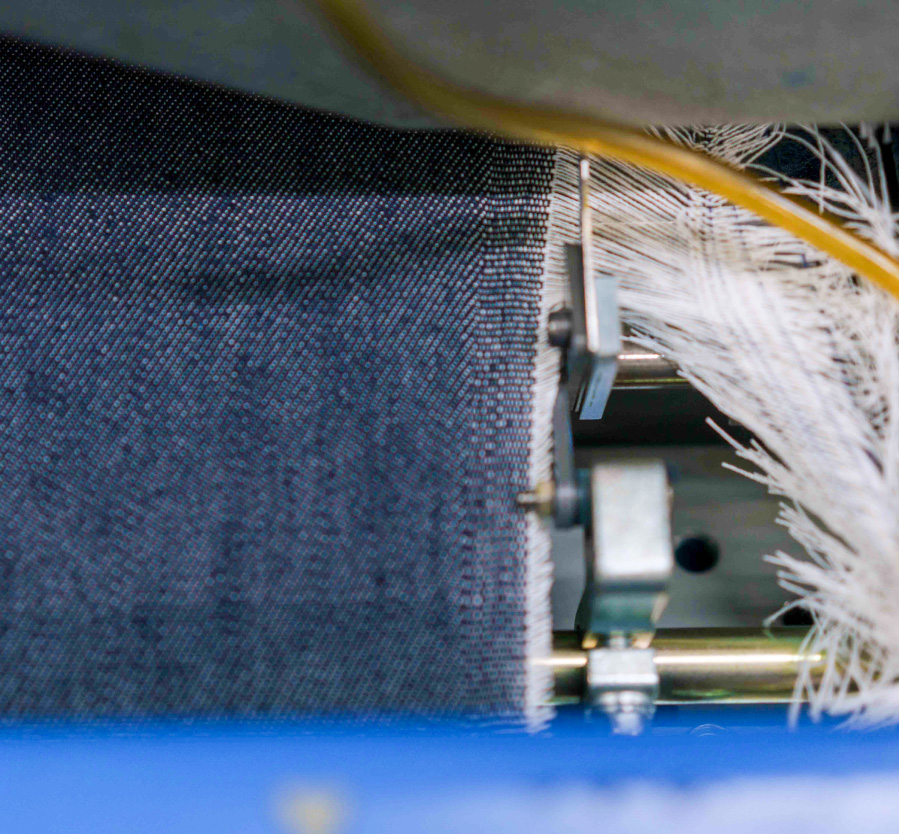
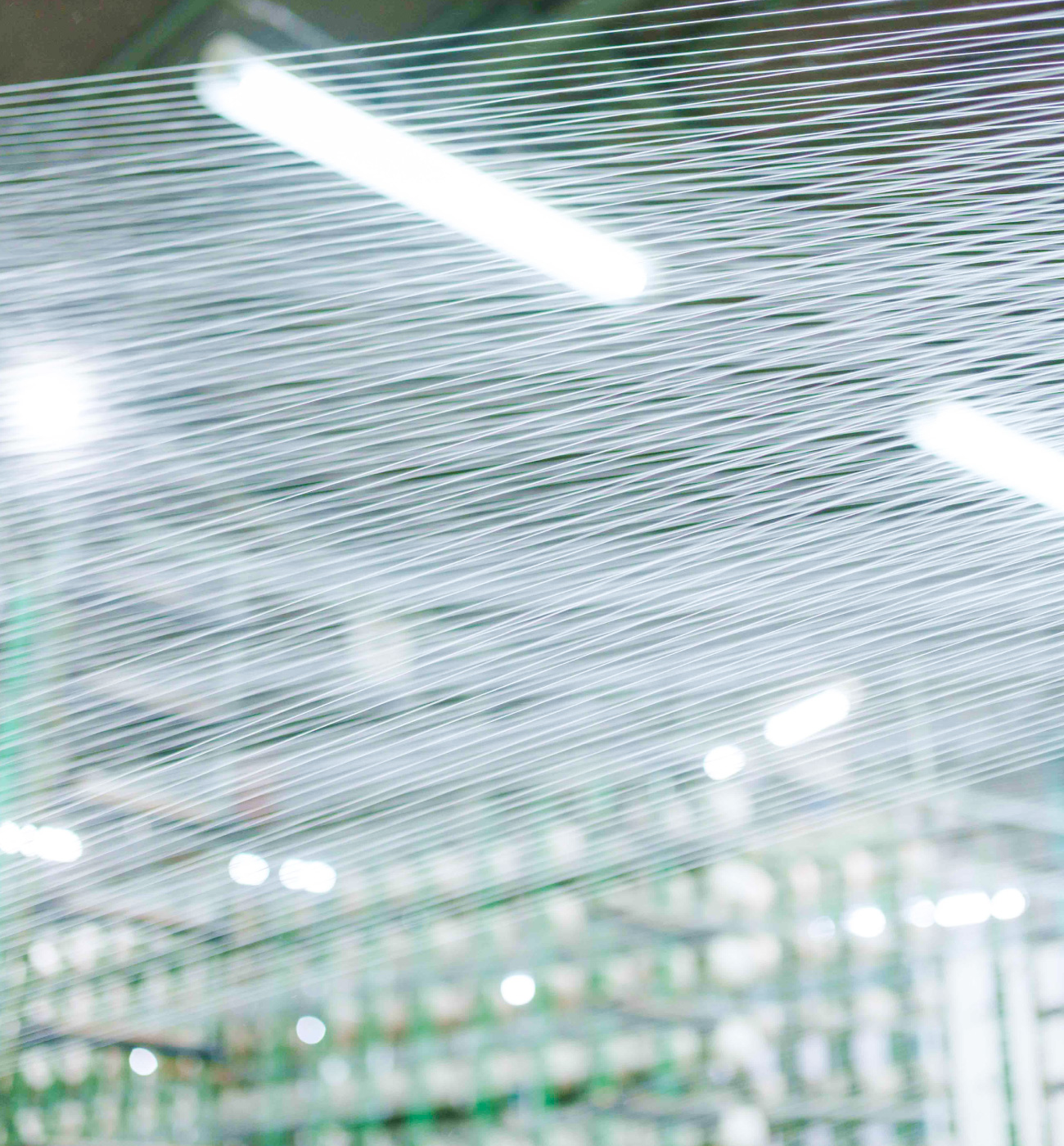
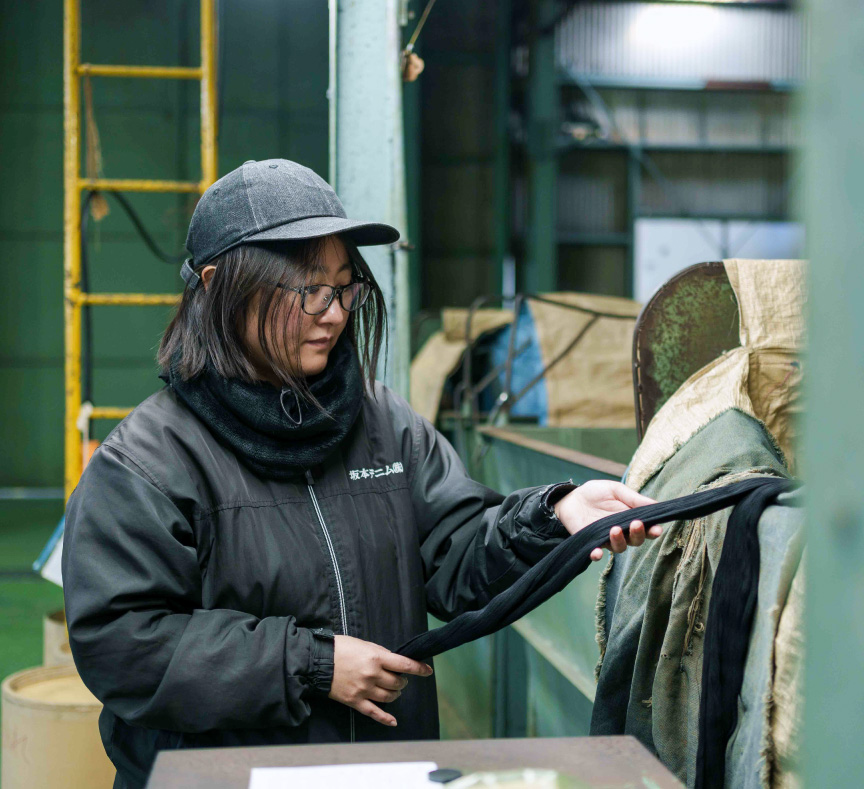
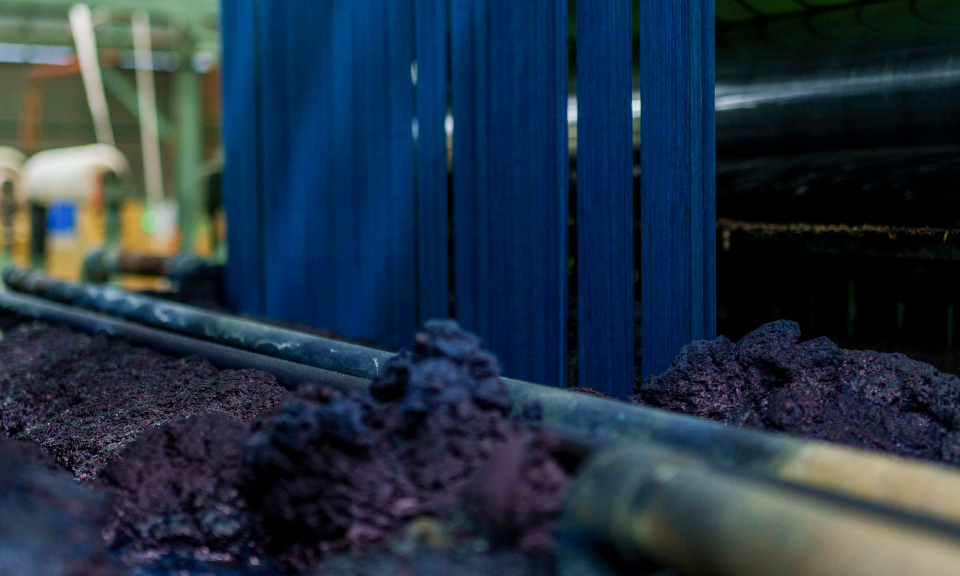
坂本デニムの工場では、白い糸がゆっくりと
インディゴに染まっていきます。
何度も何度も染めと乾燥を繰り返しながら、
糸は少しずつ深い青へと変わっていきます。
デニム特有の色落ちや風合いは、
ただ濃く染めればいいわけではありません。
糸の芯を白く残しながら、外側だけを染める。
その繊細なコントロールによって、長く使うほど
表情が変わるデニムが生まれます。
染めの工程は、温度や湿度、
その日のわずかな環境の違いにも左右されます。
だからこそ、現場では機械だけでなく、
人の目と感覚が欠かせません。
福山でデニムと向き合い続けてきた大人たちが、
一本一本の糸と向き合いながら、
色を重ねていきます。
ここで染められた糸が、次の工程へと運ばれ、
やがて一枚の生地になっていく。
まだ形のないこの青が、子どもたちの
“はじめてのデニム”につながっていきます。
The story of denim begins with dyeing the thread.
At the factory of Sakamoto Denim, white threads are slowly transformed into indigo.
Through repeated cycles of dyeing and drying, again and again,
the threads gradually deepen into a rich blue.
The distinctive fading and texture of denim cannot be achieved by simply dyeing it darker.
The core of the thread is left white, while only the outer layer is dyed.
This delicate control gives rise to denim that evolves in character the longer it is worn.
The dyeing process is influenced by subtle changes in temperature, humidity, and the day’s conditions.
That is why, on site, not only machines but also human eyes and intuition are essential.
In Fukuyama, those who have long worked with denim
carefully face each thread, layering color with intention.
The threads dyed here move on to the next process,
and eventually become a single piece of fabric.
This blue, not yet shaped into form,
will one day become a child’s very first pair of denim.
SHINOHARA TEXTILE
篠原テキスタイル
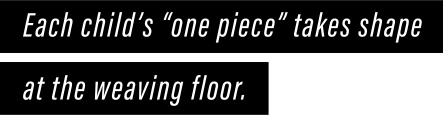
子どもたちの“一枚”は、
織りの現場で生地になります。
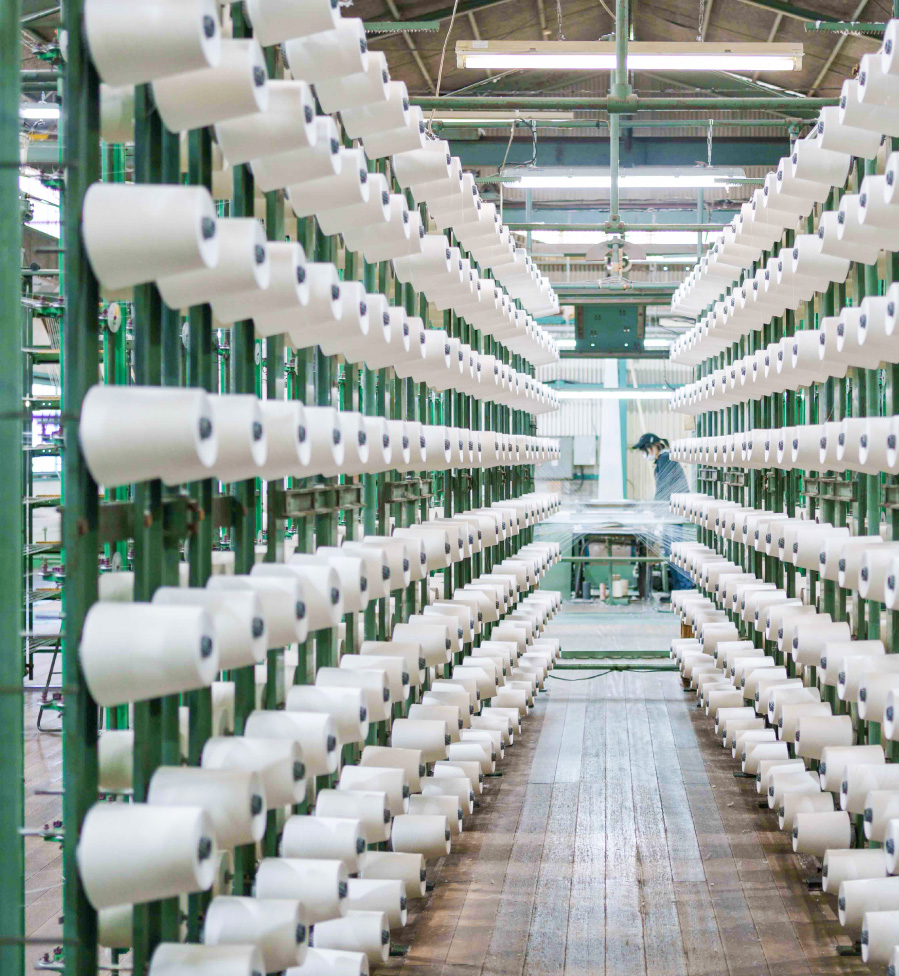
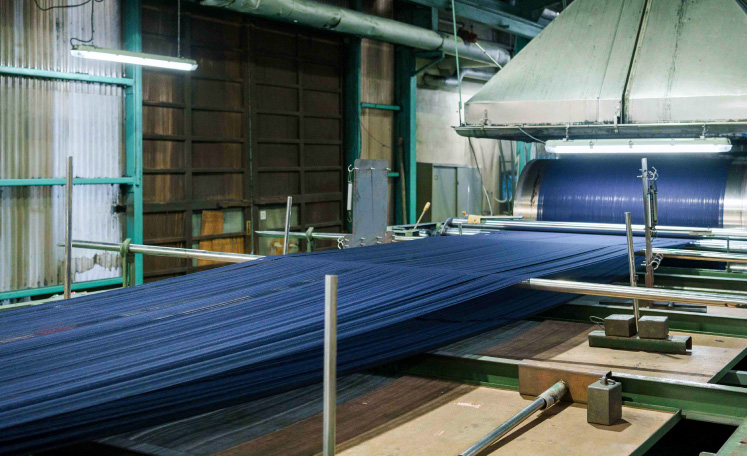
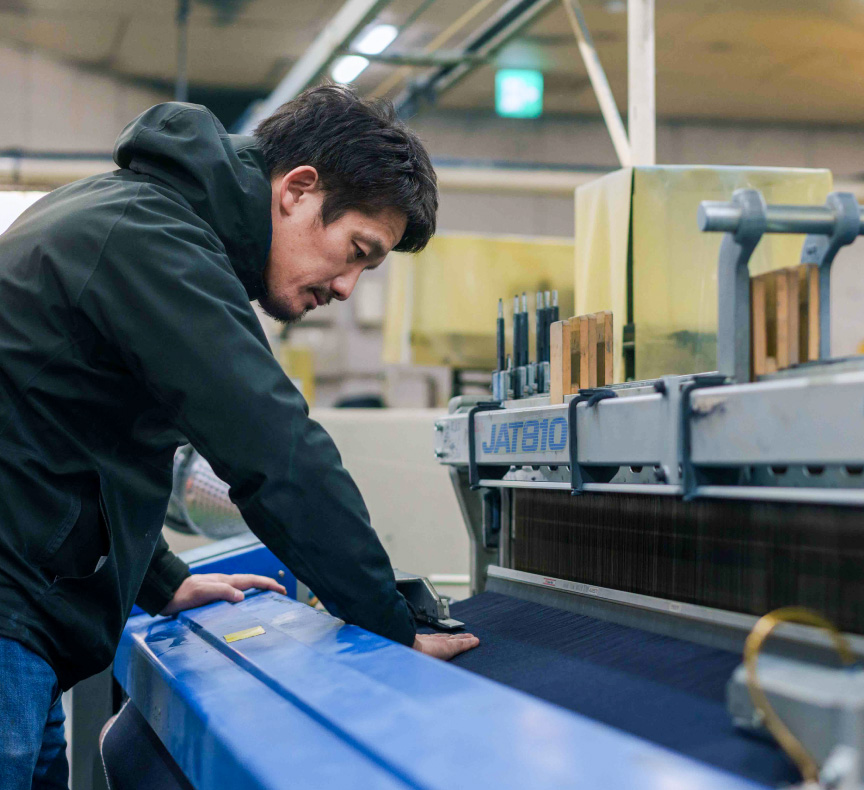
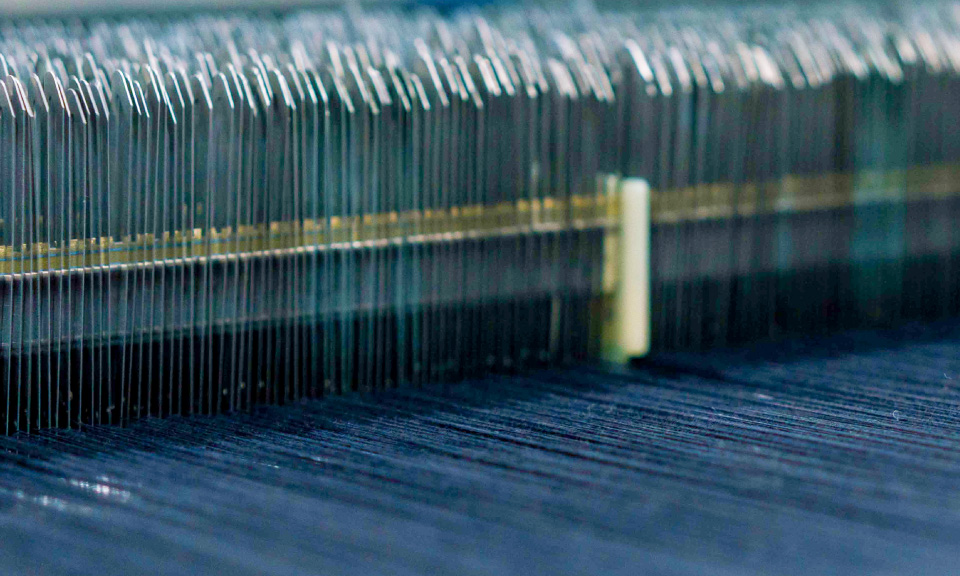
染められた糸が運ばれるのは、織物工場。
ガシャン、ガシャンと
規則正しく動く織機の中で、
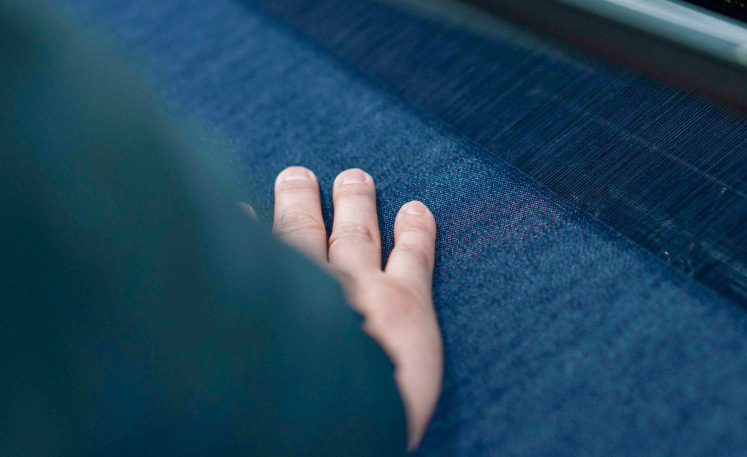
藍色に染められたタテ糸にヨコ糸が織り込まれ
生地となり、
初めてデニムとしての風合いや
表情が生まれます。
その現場にいるのは、
福山で長く織物と向き合ってきた大人たち。
篠原テキスタイルは、このまちに
400年以上続く織りの文化を受け継ぎながら、
備後絣から現在のデニム製造へと続く
技術を守り、進化し続けています。
織り方や設計のわずかな違いによって、
風合いや強さが決まっていく。
毎日使うものだからこそ、
丈夫であることを大切に。
そして、使い続けるほどに
味わいが増していくこと。
その両方を叶えるために、目には見えにくい
細かな調整が、何度も重ねられています。
このまちで織ったデニムが、
子どもたちの“はじめてのデニム”になる。
そう思うと、いつもの生地づくりが、
少し特別なものに見えてきます。
Dyed yarn is carried into the weaving mill.
Clack, clack—the looms move in a steady rhythm,
as weft threads are woven into indigo-dyed warp threads,
forming fabric and giving birth to denim’s unique texture and character for the first time.
At the heart of this process are the craftsmen of Fukuyama,
people who have long dedicated themselves to the art of weaving.
Shinohara Textile inherits a weaving culture that has continued in this town for over 400 years,
preserving and evolving techniques that trace back from Bingo kasuri to modern denim production.
Subtle differences in weaving methods and design determine the fabric’s texture and strength.
Because it is used every day, durability matters.
And with continued use, it should develop a deeper character over time.
To achieve both, countless fine adjustments—often invisible to the eye—are made again and again.
Denim woven in this town
becomes a child’s very first pair of denim.
With that in mind,
the everyday act of making fabric begins to feel just a little more special.
C2
C2
一枚の生地が、“使われるもの”へと
変わる場所。
織り上がったデニム生地は、
裁断・縫製の工程へと進みます。
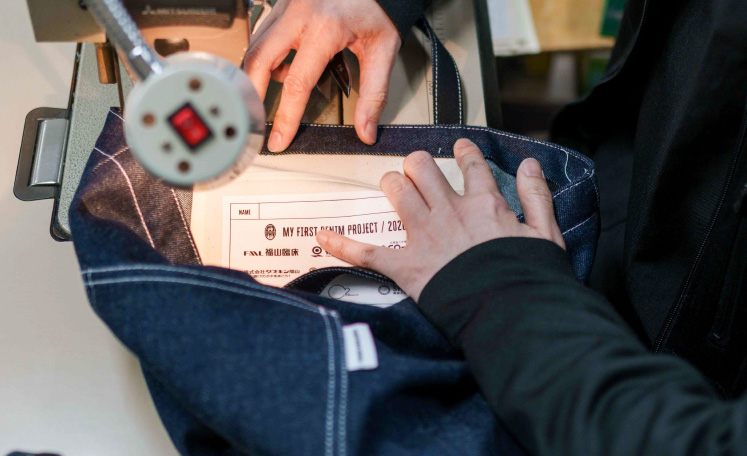
C2では、生地がバッグという形に
仕立てられていきます。
一つひとつのパーツを正確に裁断し、
丁寧に縫い合わせていく。
その積み重ねによって、
日常で使われるプロダクトが生まれます。
子どもたちが毎日持ち歩くことを想定し、
強度や軽さ、使いやすさのバランスを
細かく調整していきます。
見た目の美しさだけでなく、長く使えること。
そして、どんな日常にもなじむこと。
その両方を成立させるために、
細部まで手が入れられています。
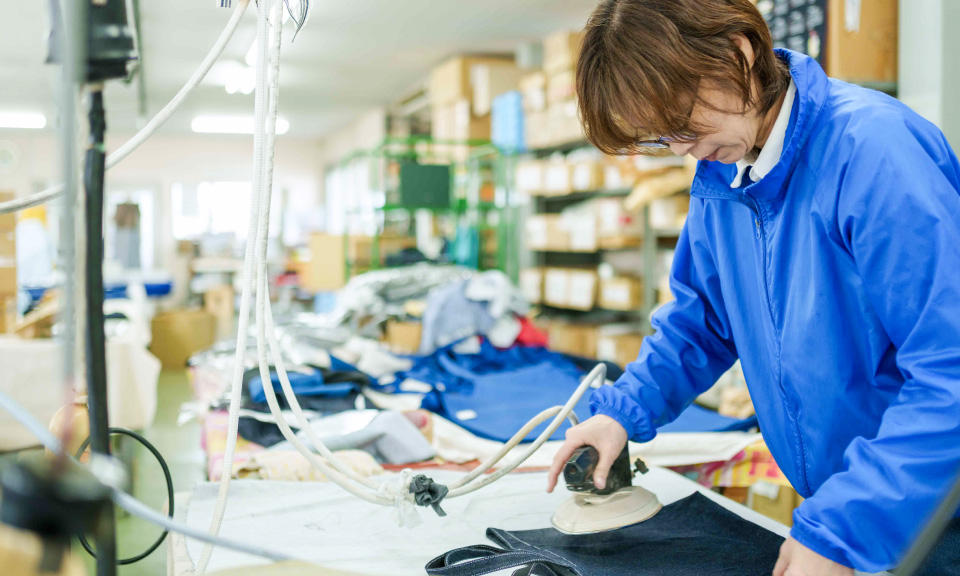
縫製の現場には、長くものづくりに
向き合ってきた職人たちがいます。
ミシンの音が静かに重なりながら、
確かな手仕事で一つずつ形にしていきます。
この場所で、生地は“製品”へと変わり、
子どもたちの手に届く準備が整います。
このまちの手でつくられたバッグが、
子どもたちの日常に寄り添いながら、
少しずつ育っていきます。
The woven denim fabric then moves into the cutting and sewing process.
At C2, the fabric is shaped into bags.
Each part is precisely cut and carefully stitched together.
Through this accumulation of steps, a product for everyday use is brought to life.
Designed for children to carry every day,
the balance of strength, lightness, and ease of use is finely adjusted.
Not only visual beauty, but durability.
And the ability to blend naturally into any daily life.
Every detail is crafted to achieve both.
In the sewing workshop, there are artisans
who have long dedicated themselves to making things by hand.
As the quiet rhythm of sewing machines fills the space,
each piece takes shape through steady, skilled work.
Here, the fabric becomes a finished product,
ready to be placed in the hands of children.
Bags made by the hands of this city
will accompany their everyday lives,
growing little by little alongside them.
プロジェクトを始める前に、
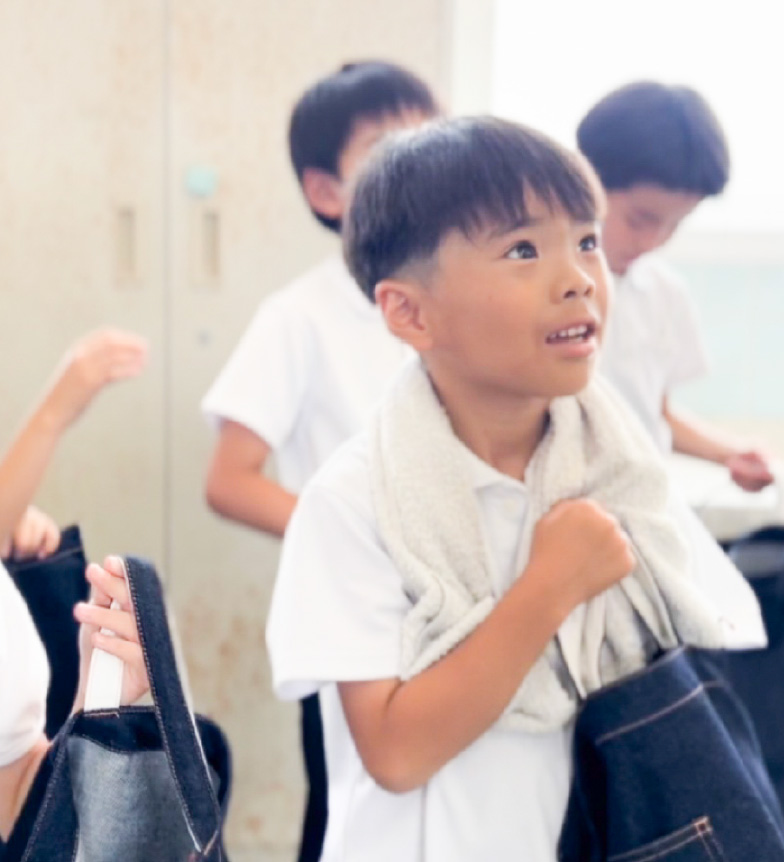
駅家西小学校で試作品を使ってもらいました。
子どもたちの声は、とても正直でした。
「重くなったとき、手さげだけだと大変」
「肩にかけやすい長さがいい」
「ポケットがほしい」
「名前を書くところがほしい」
そこで、バッグの仕様を見直しました。
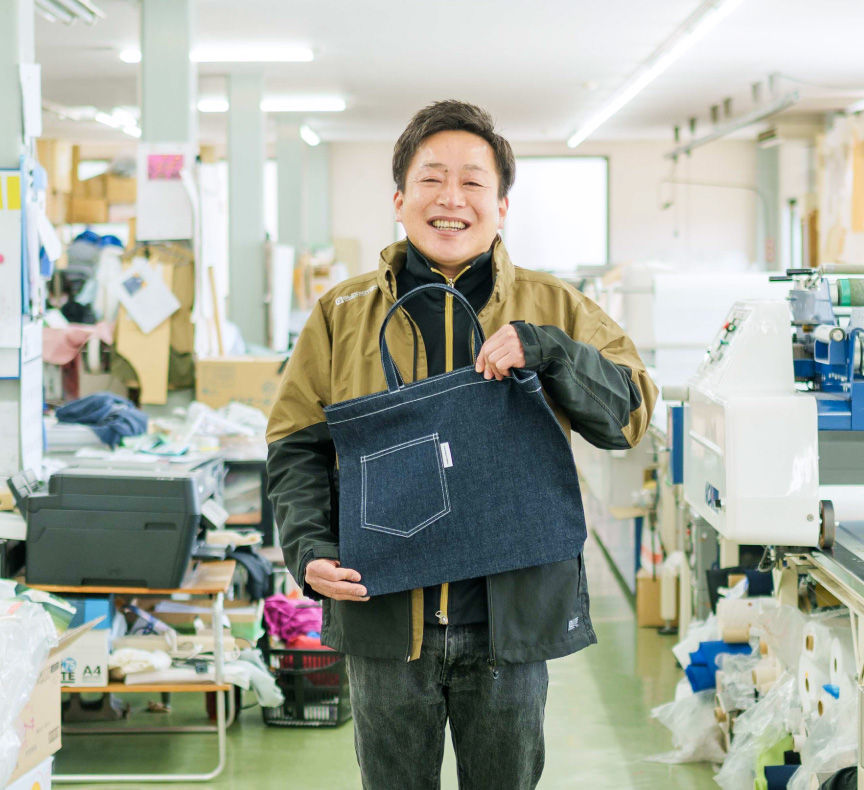
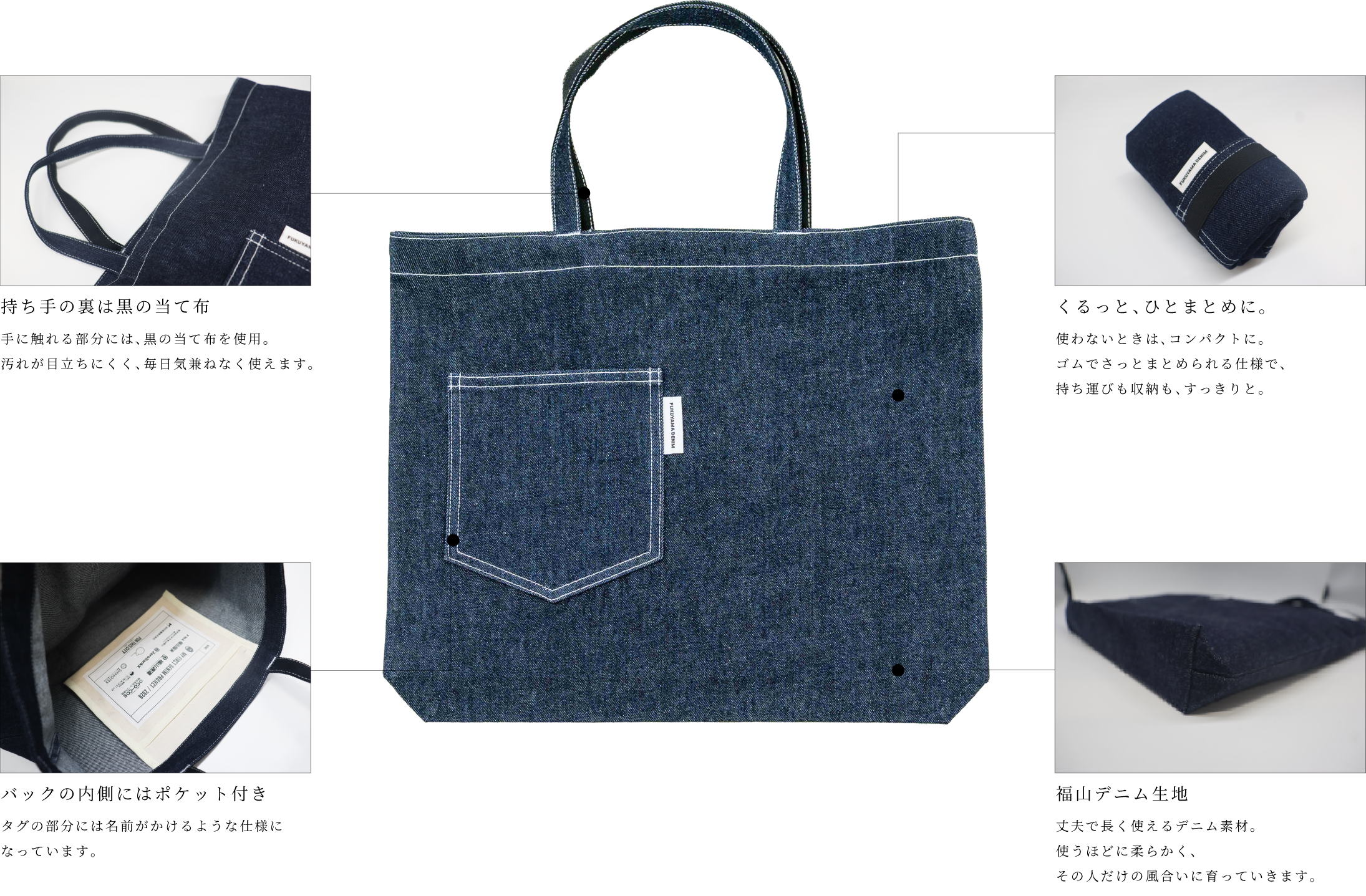
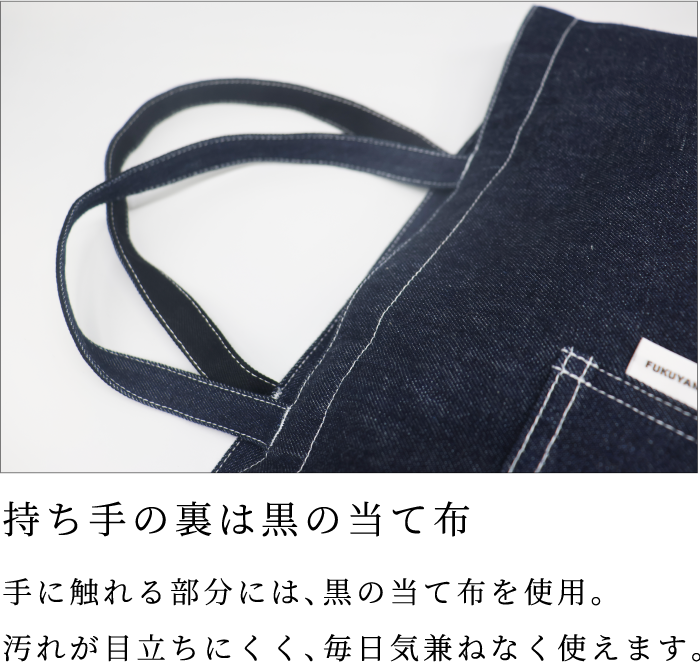
持ち手は子どもたちが引きずらない長さに調整。
外側と内側にポケットを追加。
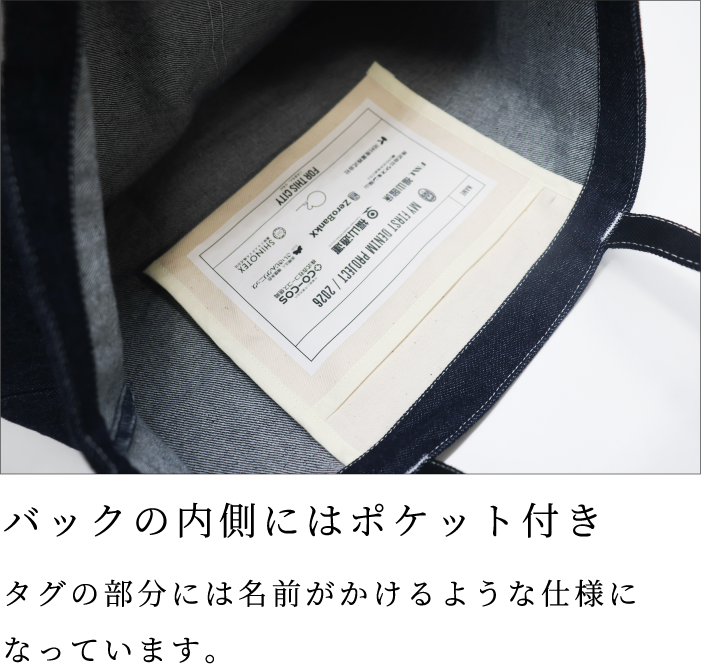
内側には名前タグスペースをつくりました。
このバッグは、
子どもたちと一緒に設計したプロダクトです。
学校で聞いた声、
工場で働く大人たちの技術、
そして子どもたちの「もうちょっと」。
そのすべてが重なって、
MY FIRST DENIM バッグは完成しました。
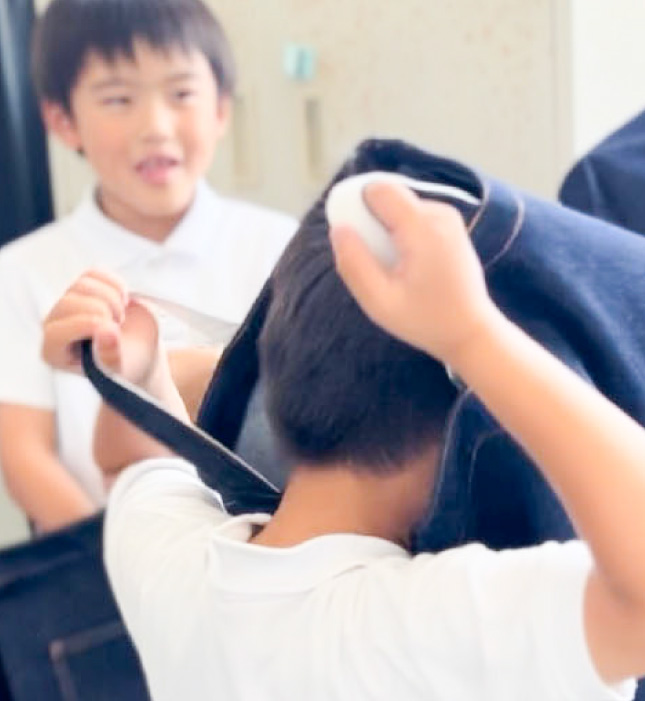
Before launching the project, we asked students at Ekie Nishi Elementary School to try a prototype.
The children’s feedback was very honest.
“When it gets heavy, carrying it only by hand is hard.”
“I wish the strap were long enough to put on my shoulder.”
“I want a pocket.”
“There should be a place to write my name.”
So we went back and revised the bag’s design.
The handles are adjusted to a length that prevents children from dragging them.
Pockets were added both outside and inside the bag.
A name tag space was also created inside.
This bag is a product designed together with the children.
The voices we heard at school,
the craftsmanship of the adults working in the factories,
and the children’s simple wish for “just a little more.”
All of these came together to create
the My First Denim bag.
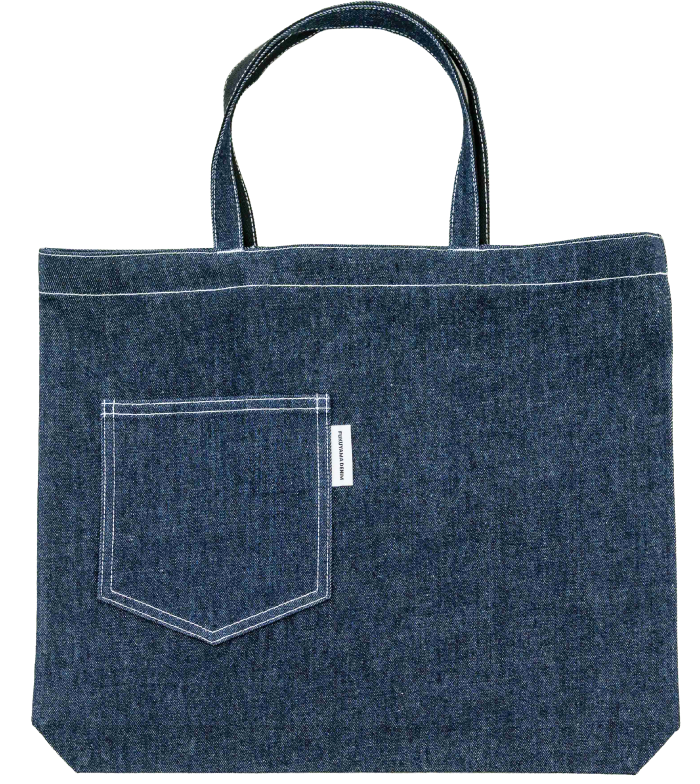
「ちょうどいい」
をかたちに。
SIZE/横40cm×高さ33.5cm×
マチ6cm(持ち手部分17cm)
A4サイズがしっかり入る教科書やノートも
すっきり収まるサイズ感。
マチ付きで、見た目以上の収納力。
毎日の荷物も、無理なく収まります。
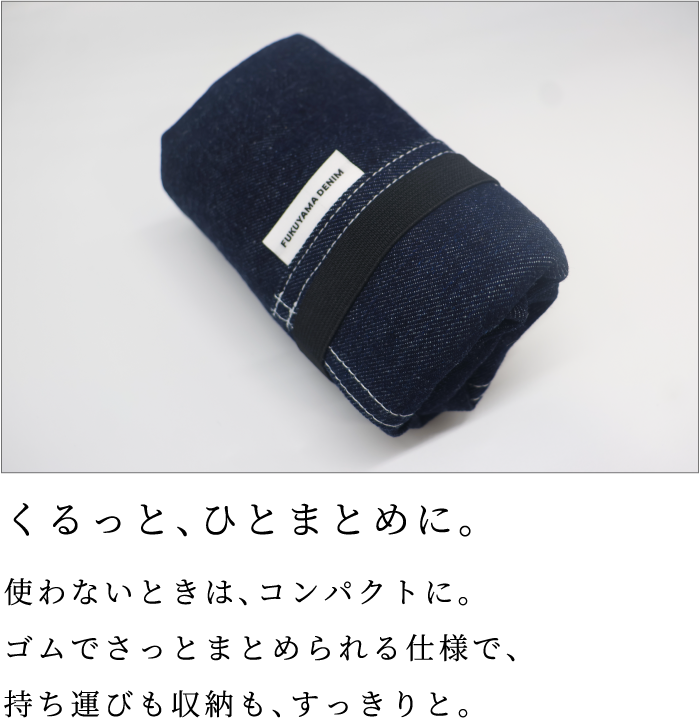
持ちやすく、ちょうどいい長さの持ち手。
手持ちでも、さっと持ち歩きやすい設計。

デニムのまちを伝える
福山シティFCの挑戦
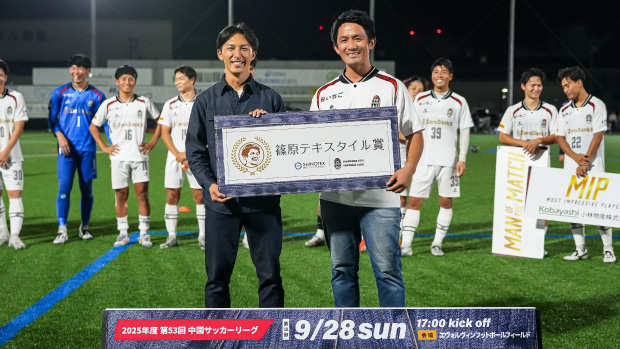
福山シティFCの仕事は、
試合で勝つことだけではありません。
私たちは「FOR THIS CITY – このまちと、
ともに」という言葉を胸に、
スポーツを通じてまちづくりを進めています。
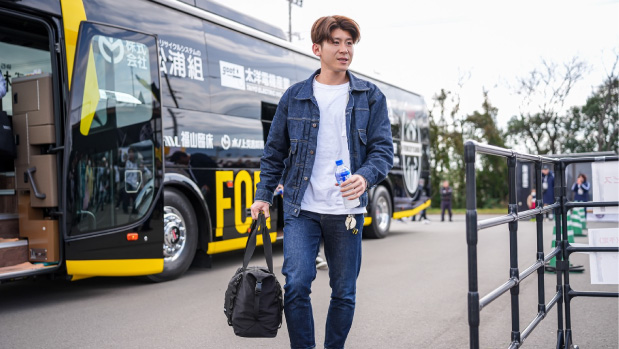
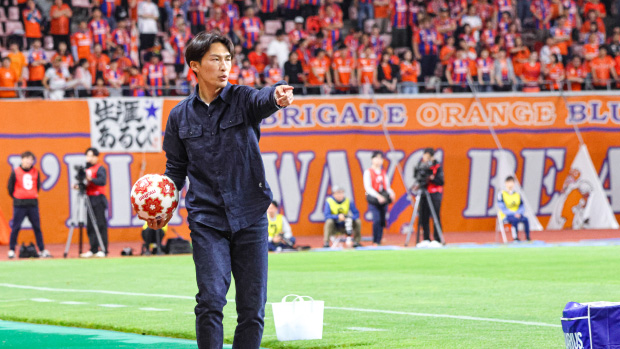
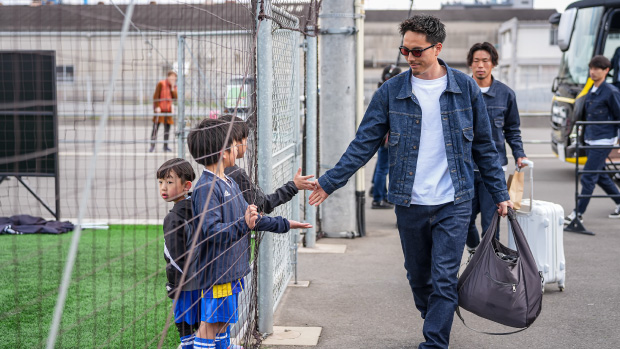
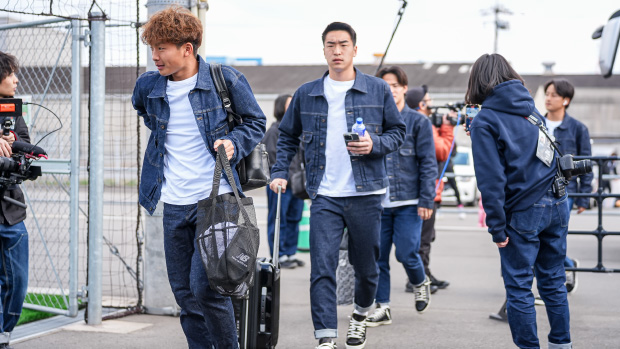
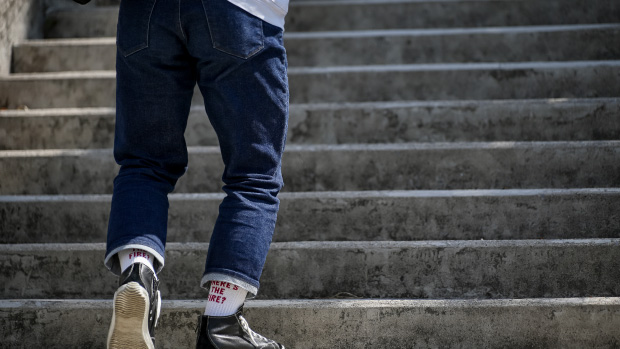
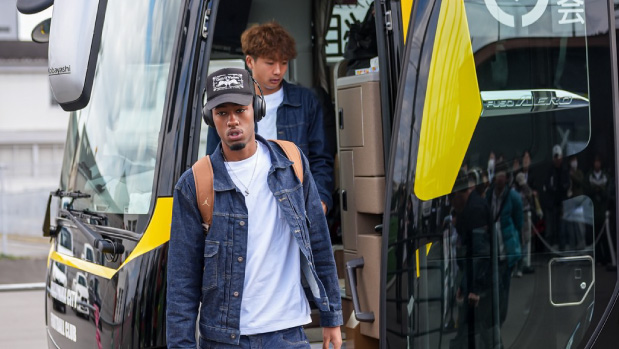
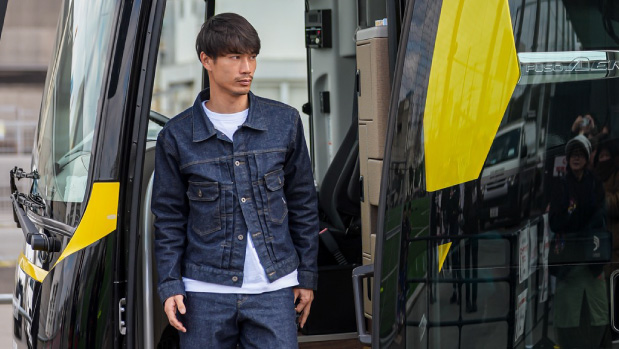
例えば、トップチームの移動着は、
備後・福山デニムのセットアップです。
「なんでサッカー選手が全員デニムなん?」
そんな疑問から、「福山=デニムのまち」を
知る方が増えています。
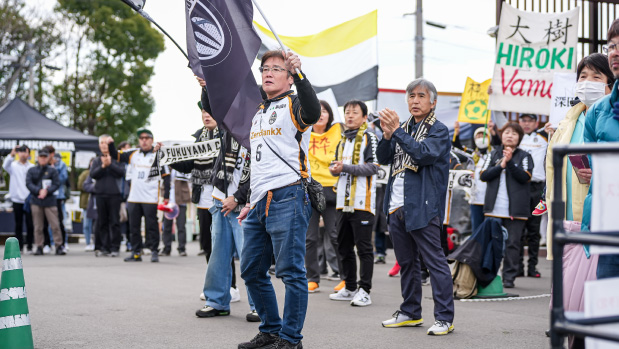
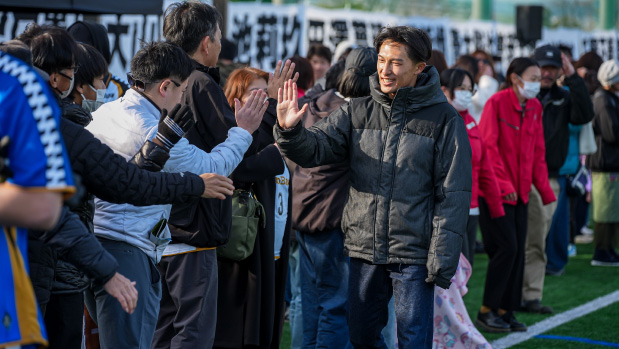
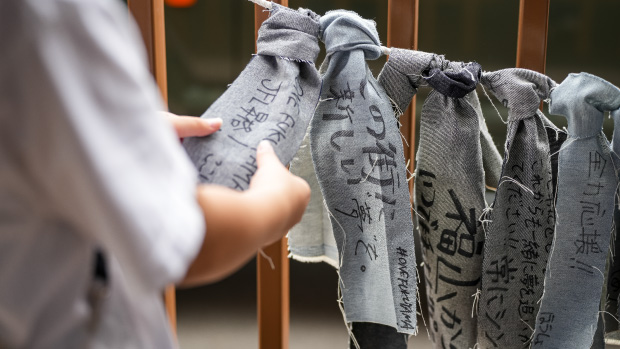
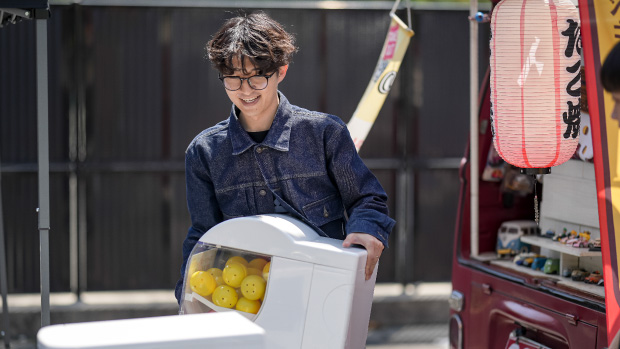
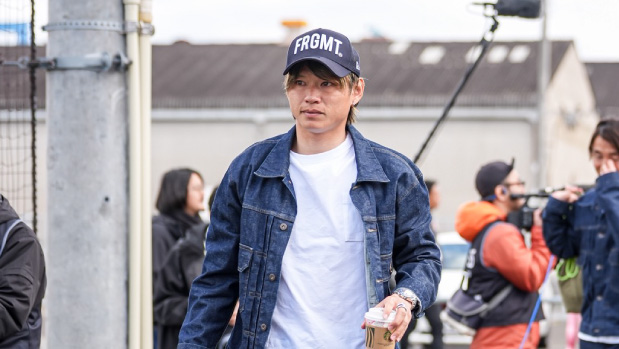
ホームゲームでは試合会場を
“デニム姿で溢れる景色”へと変えるDENIM DAY を開催。
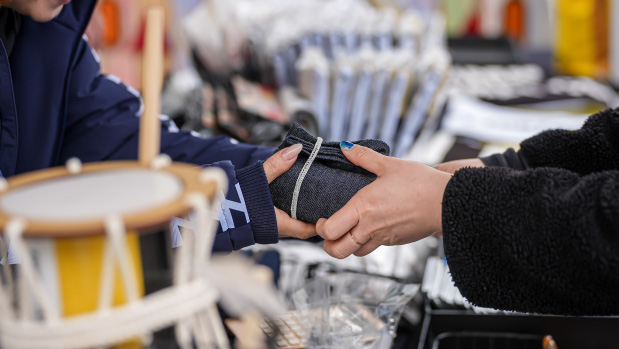
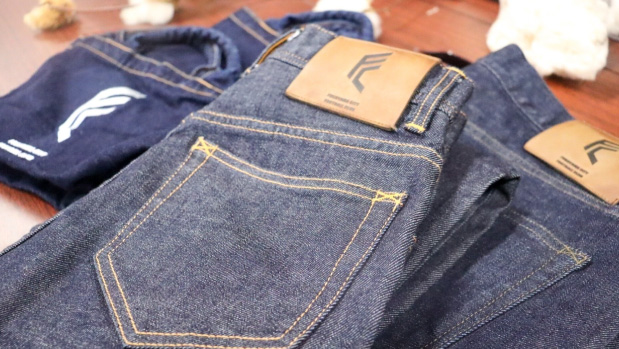
オフィシャルグッズでも福山デニムを
使った商品を多く展開しています。
発足当初からデニムというまちの文化を、
スポーツを通じてまちへ広げてきました。
Fukuyama City FC’s role is not only to win matches.
With the words “FOR THIS CITY
– Together with this city” in our hearts,
we are working to build a stronger community through sport.
For example, the travel wear of our top team
is a setup made from Bingo–Fukuyama denim.
People often ask,
“Why are all the soccer players wearing denim?”
From that simple question, more and more people
begin to learn that Fukuyama is a city of denim.
For home games, we host DENIM DAY,
transforming the stadium into a sea of denim.
Our official merchandise lineup also features
many products made with Fukuyama denim.
Since the club’s founding,
we have been spreading the culture of deni
—one of the defining traditions of this city—
through the power of sport.
このプロジェクトの“背番号”は、
企業のみなさんです。
YOU ARE THE STAR
約3,400名分のファーストデニムを
すべての新一年生へ届ける。
その挑戦は、
福山シティFCだけではできません。
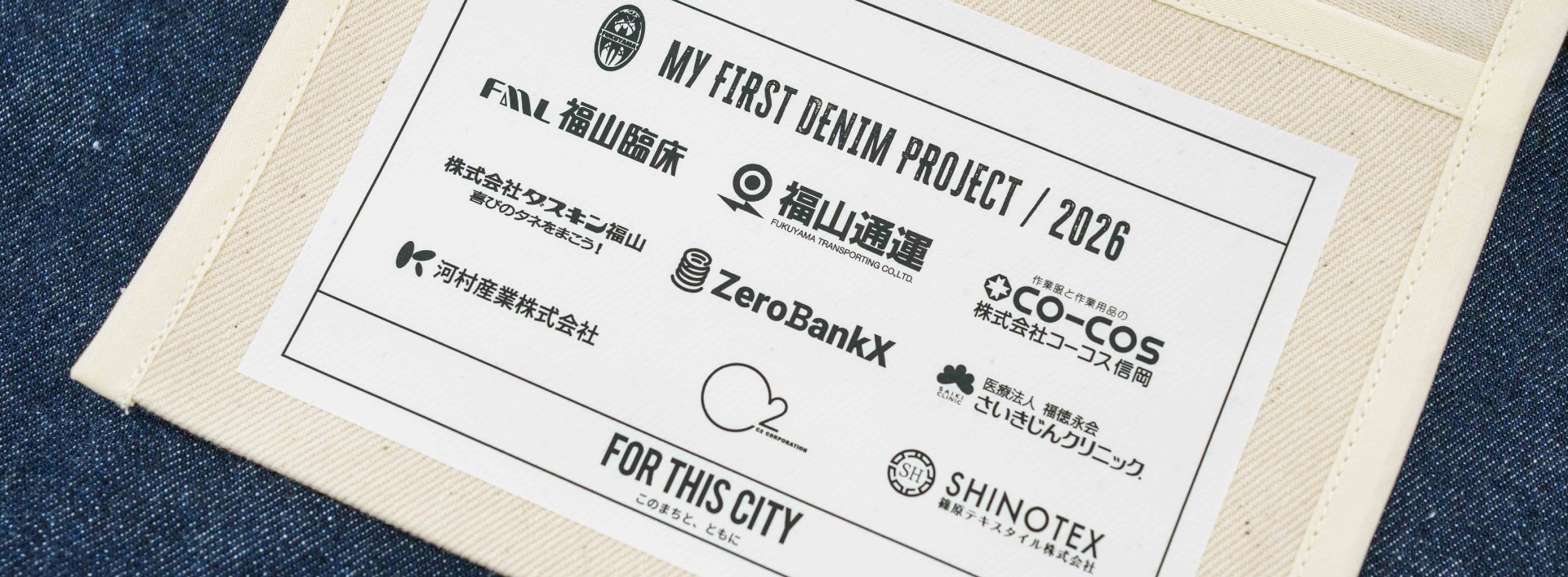
このプロジェクトを支えるのは、
福山を愛する企業のみなさんです。
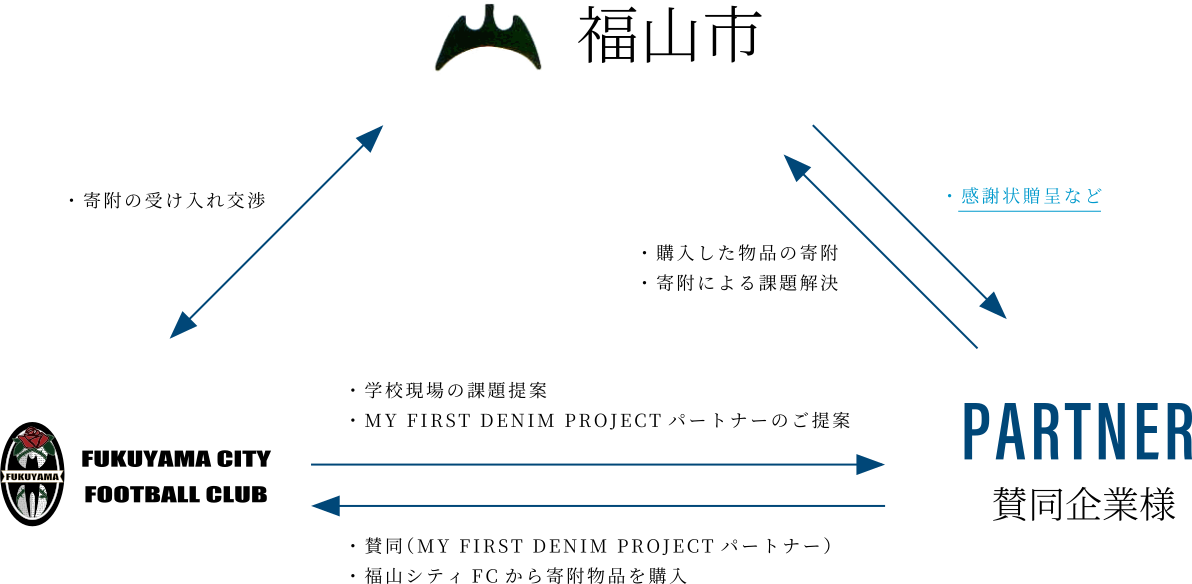
MY FIRST DENIM PROJECTでは、
パートナー企業とともにデニムバッグを
寄附という形で届けます。
企業のみなさんはスポンサーではなく、
子どもたちのチームメイト。
このまちの未来をつくる“背番号”の一つです。
企業名はバッグのタグや広報物に刻まれます。
デニムを通じてまちの産業を知ってもらう。
そして何より、
「あの会社がこのバッグをくれたんだ」
その記憶が、
子どもたちの心のどこかに残り続けます。
Delivering 3,400 First Denim bags
to every new first-grade student.
This challenge cannot be achieved by
Fukuyama City FC alone.
The project is supported by companies
that love Fukuyama.
Through the MY FIRST DENIM PROJECT,
denim bags are delivered together with partner companies in the form of a donation.
These companies are not sponsors.
They are teammates of the children—
one of the “jersey numbers”
helping shape the future of this city.
Company names will be engraved on the bag
tags and featured in promotional materials.
Through denim, children learn
about the industries of their city.
And more than anything,
“Ah, that company gave us this bag.”
That small memory will remain somewhere
in their hearts for years to come.
PARTNER
賛同企業
「買う」がそのまま
「贈る」になる仕組み。
MY FIRST DENIM PROJECT
寄附スキーム







このプロジェクトを支えるのは、
福山を愛する企業のみなさんです。
MY FIRST DENIM PROJECTでは、
パートナー企業とともに、デニムバッグを
「寄附」というかたちで子どもたちに届けます。
企業のみなさんのご参加が、
そのまま福山の未来を応援する力になります。
10年後、このまちで。
10年後。
クローゼットの奥から、
色落ちしたデニムバッグが出てくる。
「懐かしい。小学校でもらったやつだ。」
その色は、福山で過ごした時間の色。
MY FIRST DENIM PROJECT。
「福山って、ちょっと誇らしいよね。」
このまちを、そう思える未来のために。
Ten years from now,
a faded denim bag is pulled from the back of a closet.
“Wow… I remember this. I got it in elementary school.”
Its worn color holds the memories of time spent in Fukuyama.
My First Denim Project.
“So… Fukuyama is kind of something to be proud of.”
For a future where people can feel that way about this city.